Biography
-
Bernard Greaves, 1942-
For thirty years, Bernard Greaves has influenced Liberal, Liberal Democrat and public policy on a range of issues. Generally, he has done so by a willingness to rigorously follow through original ideas based on firm and clear principles and a painstaking application to detail. He has greatly influenced a smaller number by the force of…
-
Jeremy Bentham, 1745-1832
[…]Bentham’s enduring legacy is a complex one. On the one hand, he is associated with utilitarian projects for social reform which suggested an activist conception of the state and which attracted charges of collectivism. On the other, his constitutional theory, with its suspicion of big government and its democratic commitment to accountability and openness, suggests…
-
David Lloyd-George (Earl Lloyd-George and Viscount Gwynedd), 1863-1945
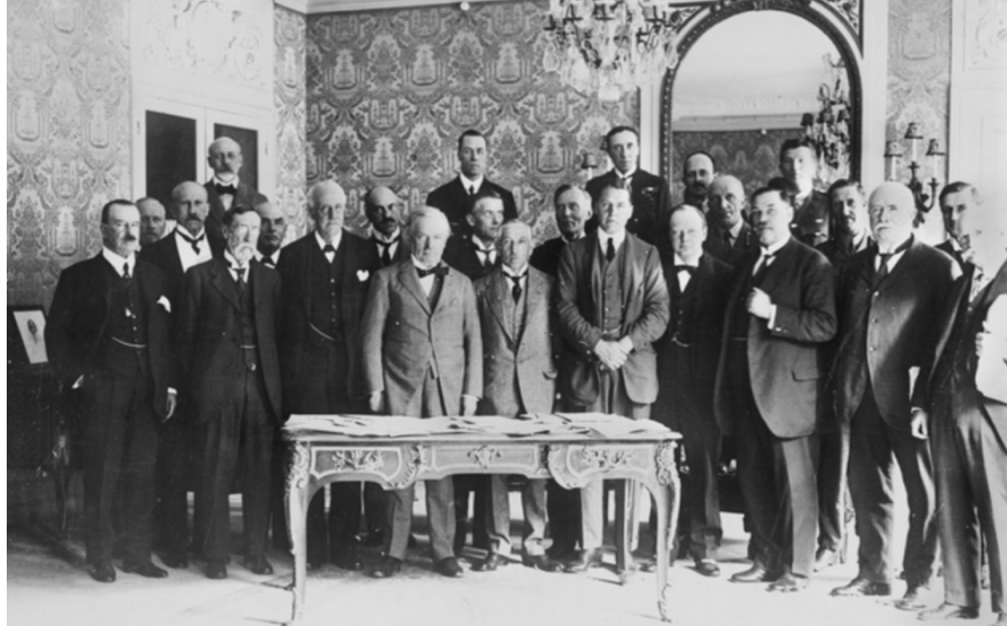
[…]The pinnacle of Lloyd George’s career was the peace-making at Paris in the first half of 1919, leading to the Treaty of Versailles, signed on 28 June 1919. While rightly criticised in many aspects (such as the war guilt clause, the scale of reparations and many boundaries), Lloyd George tilted the settlement in a more…
-
Sir William Harcourt, 1827-1904
{…}It took Harcourt, like Gladstone, a long time to become a Liberal, but once this affiliation was decided, he became an active and prominent one. He did not completely fulfil his expected potential, being perhaps the classic case of the best Prime Minister we never had. But as a strong contender for another title, that…
-
Clement Davies, 1884-1962
[…]rom his boyhood Clement Davies had been fascinated by political life. He was approached as a possible Liberal candidate as early as 1910, but did not consent to stand for Parliament until 1927 when he was chosen as the Liberal candidate for his native Montgomeryshire. Seen initially as an avid radical and a stalwart supporter…
-
Sir Clement Freud, 1924-2009
Clement Freud was one of the best-known faces on TV, and best-known voices on radio, when he became Liberal candidate for the Isle of Ely in the 1973 by-election. ‘Freud has them rolling in the Isle’ ran one tabloid headline. Those who did not know him were surprised that, even during a promising run of…
-
Bill Rodgers (Lord Rodgers), 1928-
Bill Rodgers – one of the Gang of Four who founded the SDP, and now (as Lord Rodgers of Quarry Bank) the leader of the Liberal Democrats in the House of Lords – was born in Liverpool on 28 October 1928 and named William Thomas Rodgers. His father was employed for forty years by the…
-
Dingle Foot, 1905-1978
Throughout Britain, particular constituencies and cities have had a long connection with certain families – for instance, the Chamberlains in Birmingham and the Cecils in south Dorset. In Plymouth, politics has been dominated by the Foot family, principally Isaac Foot but also four of his five sons. These include Hugh (later Lord Caradon), John, and the…
-
Joseph Chamberlain, 1836-1914
In a picture postcard (Tuck & Sons Ltd, c. 1905) Radical Joseph was pictured wearing a coat of many colours. Each segment was labelled with different stages in his political career: socialist, extreme radical, Gladstonian, Liberal Unionist, Conservative and protectionist and food taxer. Inconsistent was one of the more favourable epithets used of Chamberlain. To…